Create a 16:9 horizontal triptych portrait (three-panel layout) on a perfectly pure white seamless studio background. Split the canvas into three equal vertical panels with a thin clean gutter. In all three panels, match the reference images for identity, facial structure, hairstyle, ornate headpiece, costume, jewelry, feathers, shot size, framing, camera angle, subject placement, lighting ratio, and overall color grading. Keep everything else unchanged across panels—only the facial expression and micro-gestures change.To avoid repetitive expressions, make each panel’s emotion clearly distinct and easy to read (stronger contrast between panels, but without distorting the face):• Left panel (playful / cheeky): a mischievous smirk with one eye gently winking OR a subtle teasing grin; eyes sparkling, confident playful energy.• Middle panel (cute / “acting adorable”): innocent wide eyes, slightly puffed cheeks, a tiny pout or “duck-lip” (very subtle), a sweet bashful vibe; keep it charming, not exaggerated cartoon.• Right panel (sulky / pouting / “hmph”): a mild offended or stubborn look—lips pressed or a small pout, slight cheek puff, eyebrows subtly knit; gaze can turn a fraction aside but keep the same framing and head scale.Preserve realistic anatomy and the exact same facial proportions (no changes to age, eye shape, jawline, nose, or face width). Ensure clean cutout edges around hair ornaments and feathers against the pure white background. Do not add any watermark, logo, subtitles, UI elements, borders, QR codes, signatures, or any extra text.
表情搞怪三视图提示词:
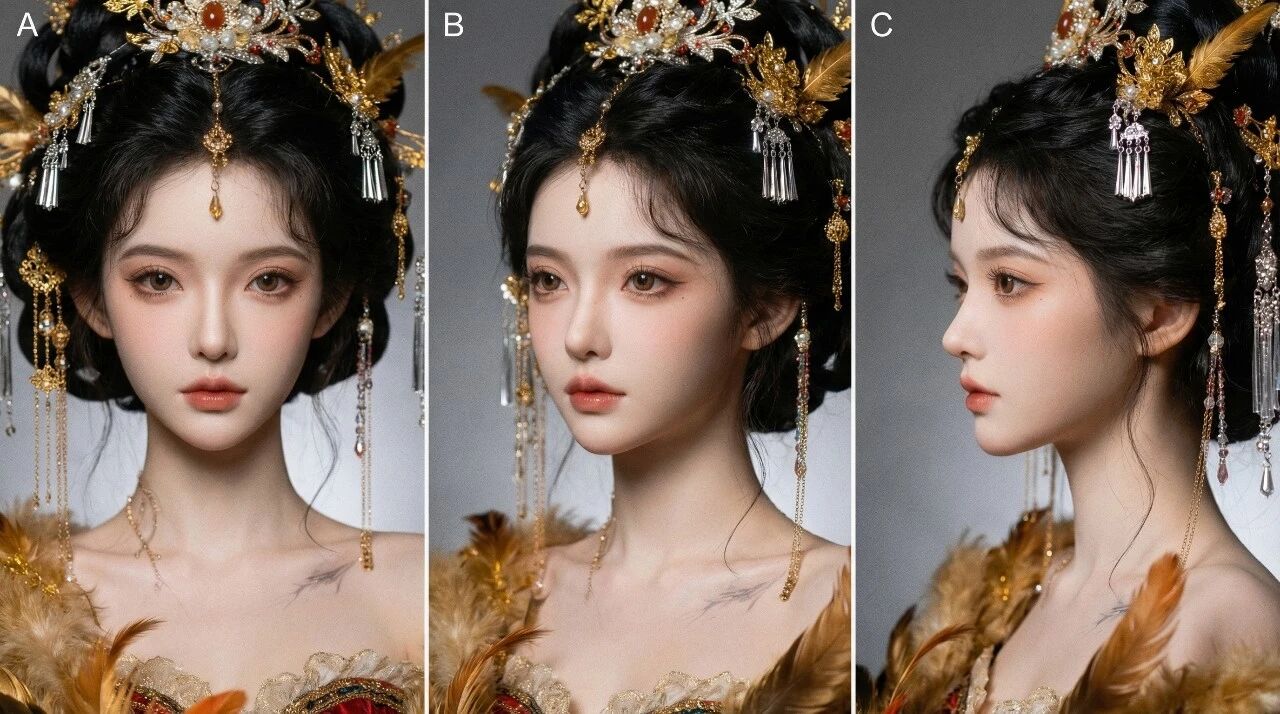
No matter what background appears in the reference images (white, outdoor, or any environment), replace it and render the final image as a premium studio look-test triptych on a textured gray seamless backdrop. The gray background must have a subtle gradient falloff and fine photographic grain, consistent across all three panels, with no environmental elements.Create one image containing three side-by-side face close-ups of the same person (head and neck only), aligned to the same scale and framing. Panel A (left) is a straight-on front view looking into the lens. Panel B (center) is a 45-degree three-quarter face view. Panel C (right) is a true 90-degree side profile. Separate the panels with two thin vertical divider lines, perfectly straight and evenly spaced, in a clean editorial layout.Unify the lighting to a controlled studio setup: soft but directional key light, gentle shadow shaping, natural contrast, crisp eye detail, and realistic skin texture (do not over-smooth). Keep the person’s identity, facial proportions, hairstyle, and overall styling matched to the reference images, but keep the background strictly the same textured gray studio backdrop in every panel.Add only the panel labels exactly as text: “A” above the left panel, “B” above the center panel, and “C” above the right panel, in a simple clean sans-serif, small and understated. Do not add any other text. Do not add any watermark, logo, subtitles, UI elements, borders, QR codes, signatures, or extra text.


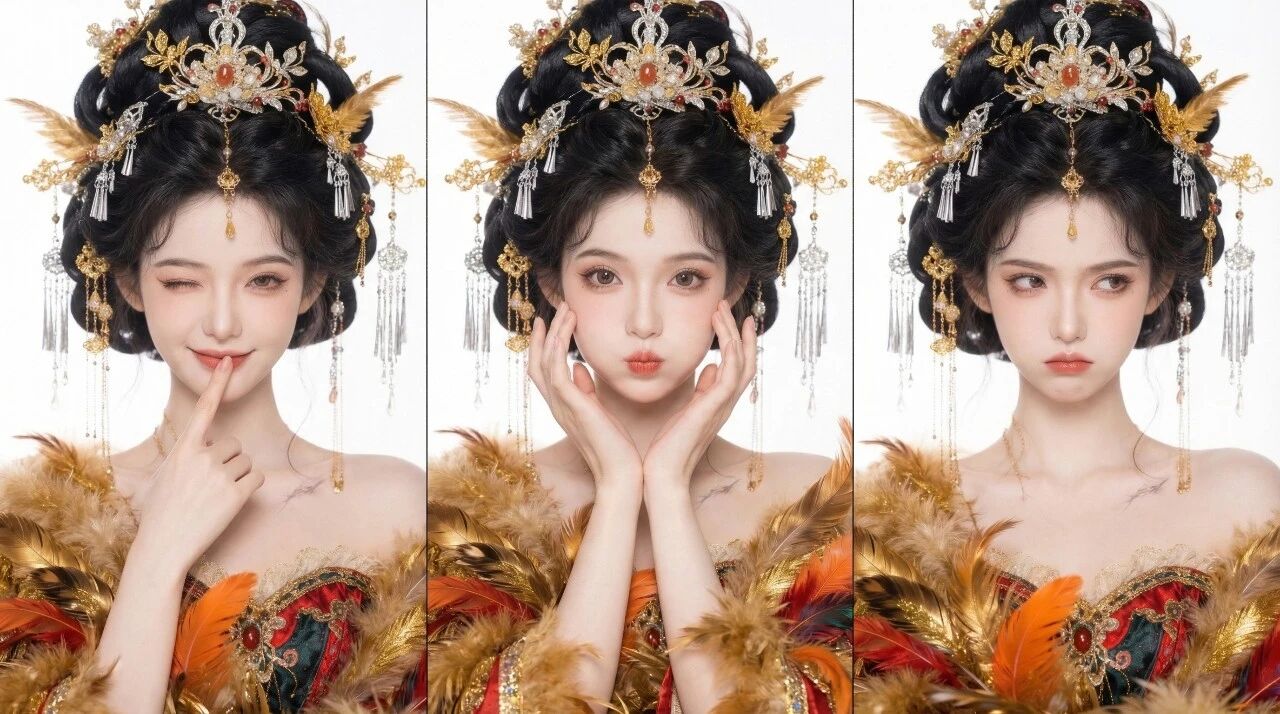
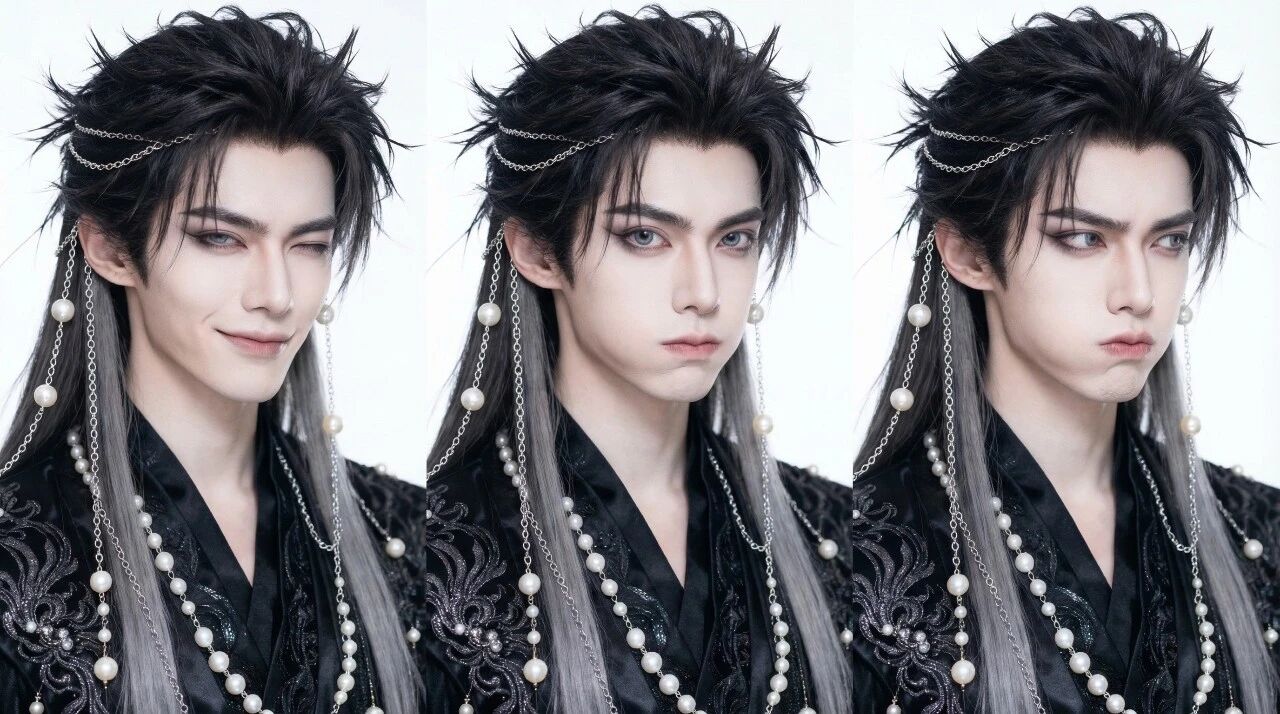
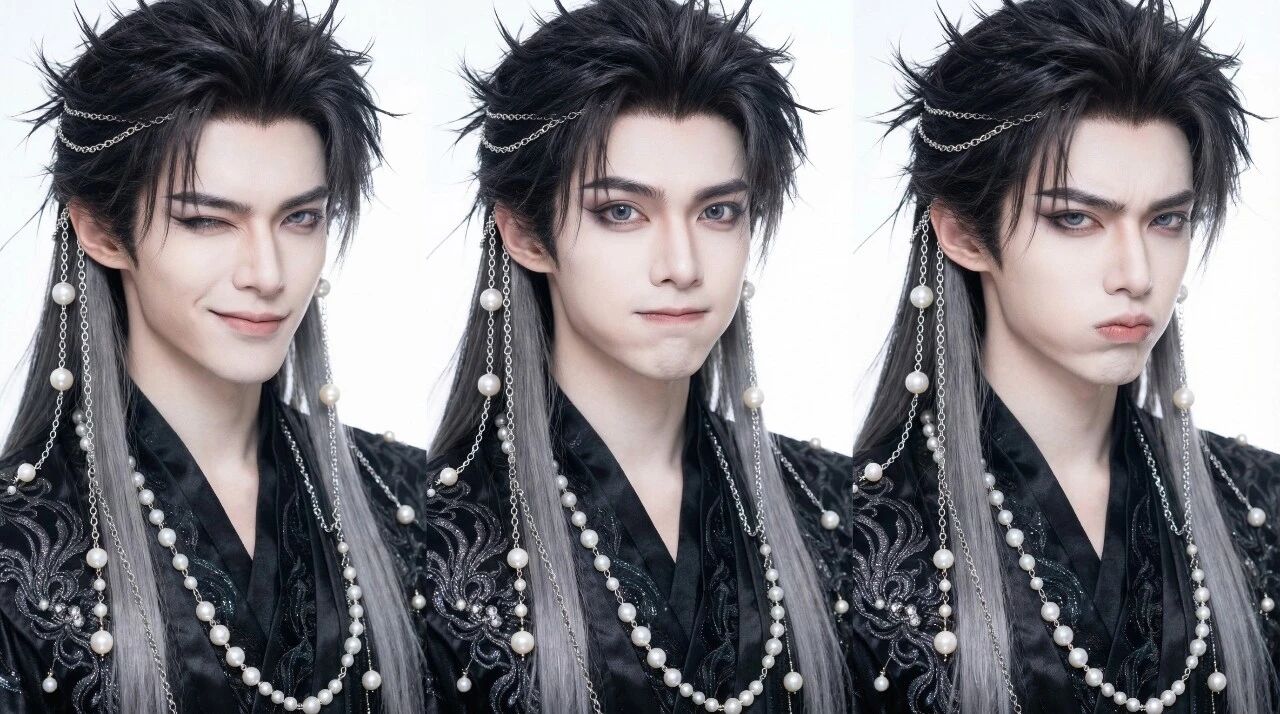

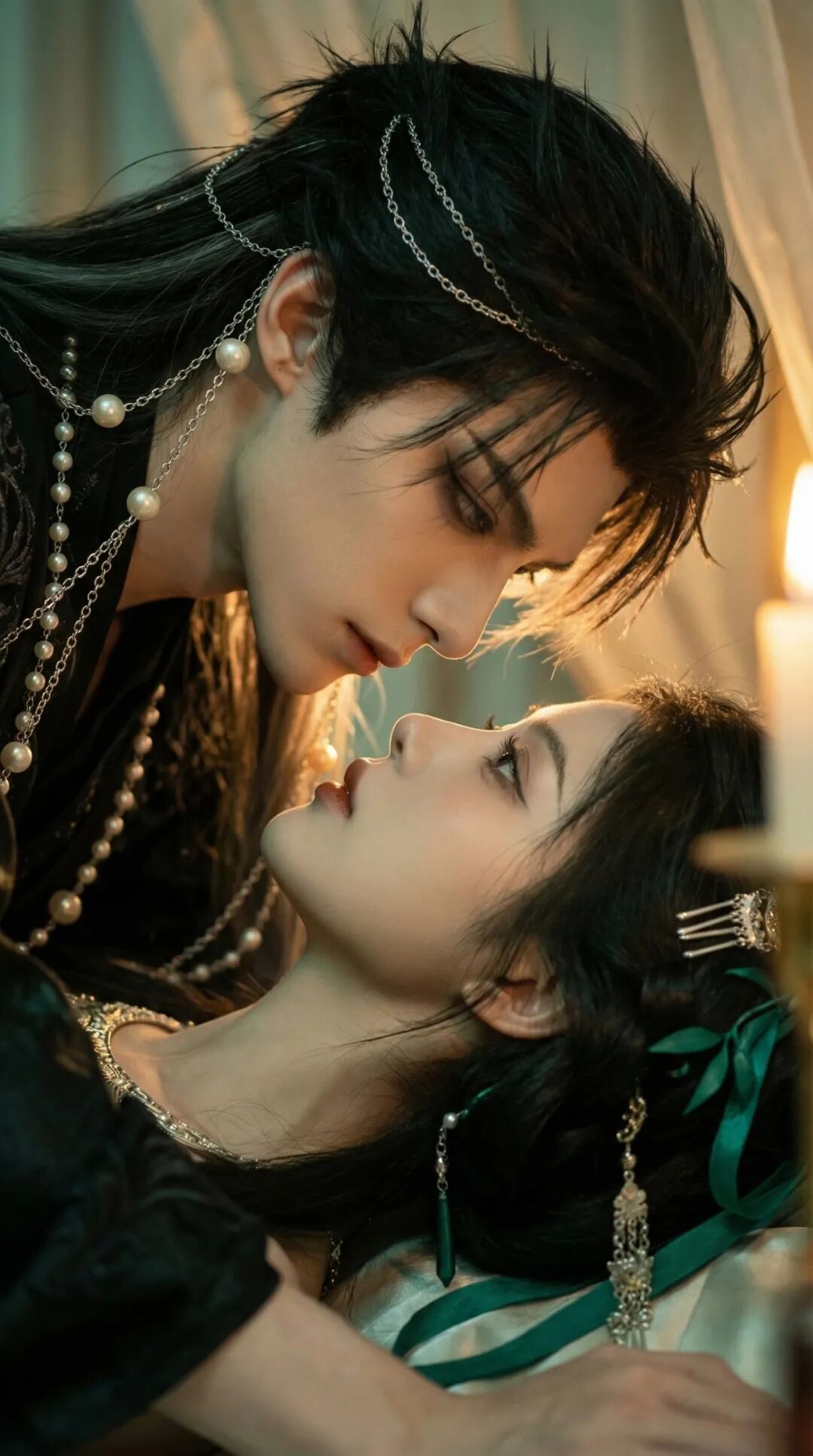
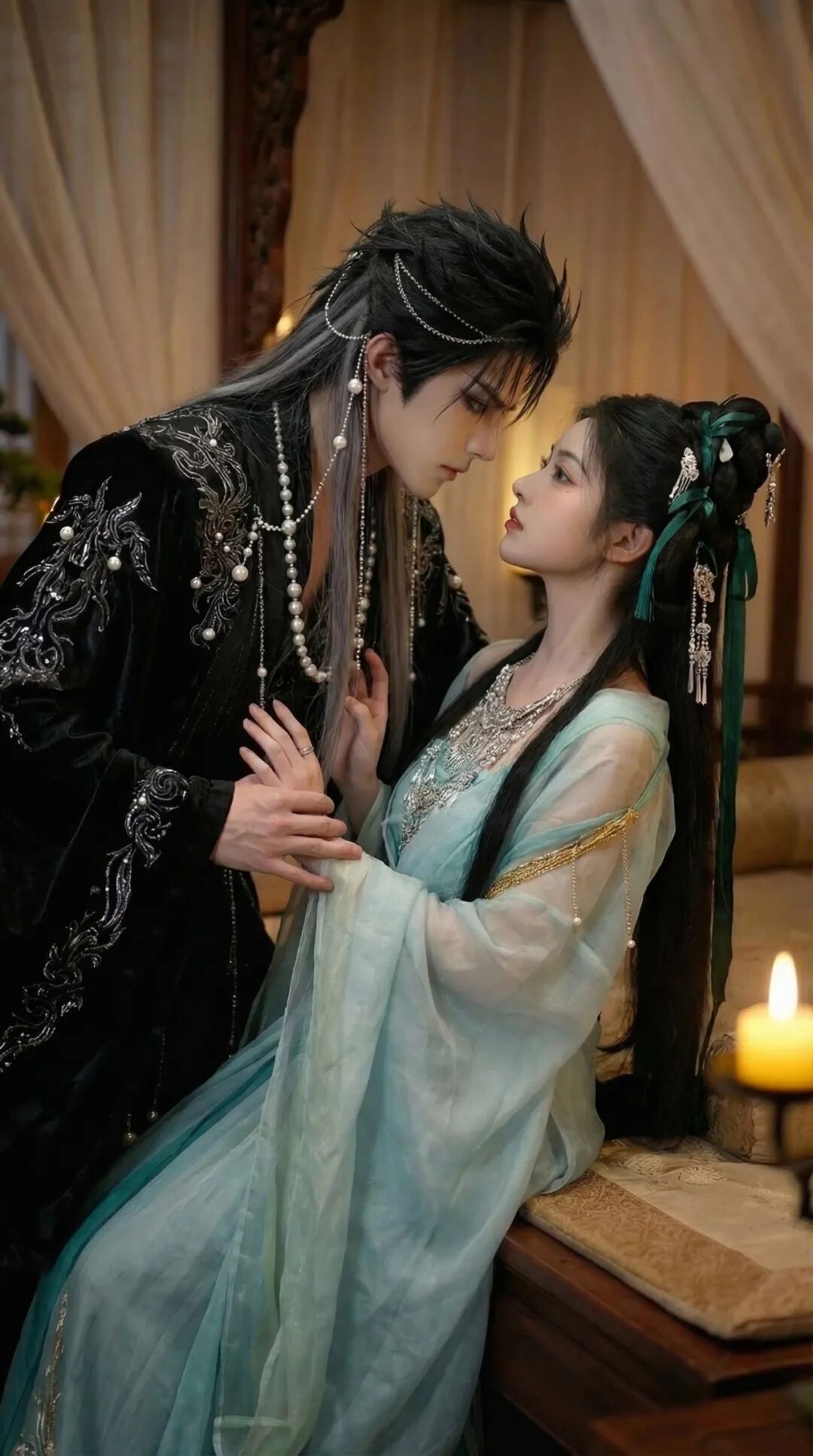


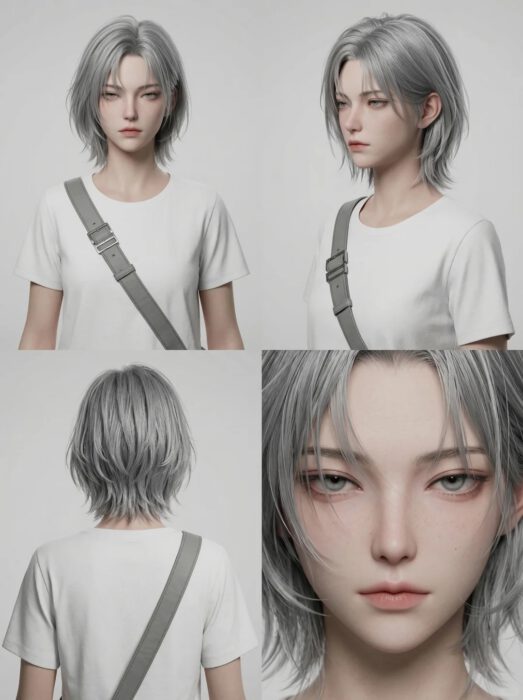

Create a 16:9 horizontal triptych portrait (three-panel layout) on a perfectly pure white seamless studio background. Split the canvas into three equal vertical panels with a thin clean gutter. In all three panels, match the reference images for identity, facial structure, hairstyle, ornate headpiece, costume, jewelry, feathers, shot size, framing, camera angle, subject placement, lighting ratio, and overall color grading. Keep everything else unchanged across panels—only the facial expression and micro-gestures change.To avoid repetitive expressions, make each panel’s emotion clearly distinct and easy to read (stronger contrast between panels, but without distorting the face):• Left panel (playful / cheeky): a mischievous smirk with one eye gently winking OR a subtle teasing grin; eyes sparkling, confident playful energy.• Middle panel (cute / “acting adorable”): innocent wide eyes, slightly puffed cheeks, a tiny pout or “duck-lip” (very subtle), a sweet bashful vibe; keep it charming, not exaggerated cartoon.• Right panel (sulky / pouting / “hmph”): a mild offended or stubborn look—lips pressed or a small pout, slight cheek puff, eyebrows subtly knit; gaze can turn a fraction aside but keep the same framing and head scale.Preserve realistic anatomy and the exact same facial proportions (no changes to age, eye shape, jawline, nose, or face width). Ensure clean cutout edges around hair ornaments and feathers against the pure white background. Do not add any watermark, logo, subtitles, UI elements, borders, QR codes, signatures, or any extra text.
表情搞怪三视图提示词:
No matter what background appears in the reference images (white, outdoor, or any environment), replace it and render the final image as a premium studio look-test triptych on a textured gray seamless backdrop. The gray background must have a subtle gradient falloff and fine photographic grain, consistent across all three panels, with no environmental elements.Create one image containing three side-by-side face close-ups of the same person (head and neck only), aligned to the same scale and framing. Panel A (left) is a straight-on front view looking into the lens. Panel B (center) is a 45-degree three-quarter face view. Panel C (right) is a true 90-degree side profile. Separate the panels with two thin vertical divider lines, perfectly straight and evenly spaced, in a clean editorial layout.Unify the lighting to a controlled studio setup: soft but directional key light, gentle shadow shaping, natural contrast, crisp eye detail, and realistic skin texture (do not over-smooth). Keep the person’s identity, facial proportions, hairstyle, and overall styling matched to the reference images, but keep the background strictly the same textured gray studio backdrop in every panel.Add only the panel labels exactly as text: “A” above the left panel, “B” above the center panel, and “C” above the right panel, in a simple clean sans-serif, small and understated. Do not add any other text. Do not add any watermark, logo, subtitles, UI elements, borders, QR codes, signatures, or extra text.
浏览
评价
喜欢
分享